
Call for Papers
CALL FOR PAPERS
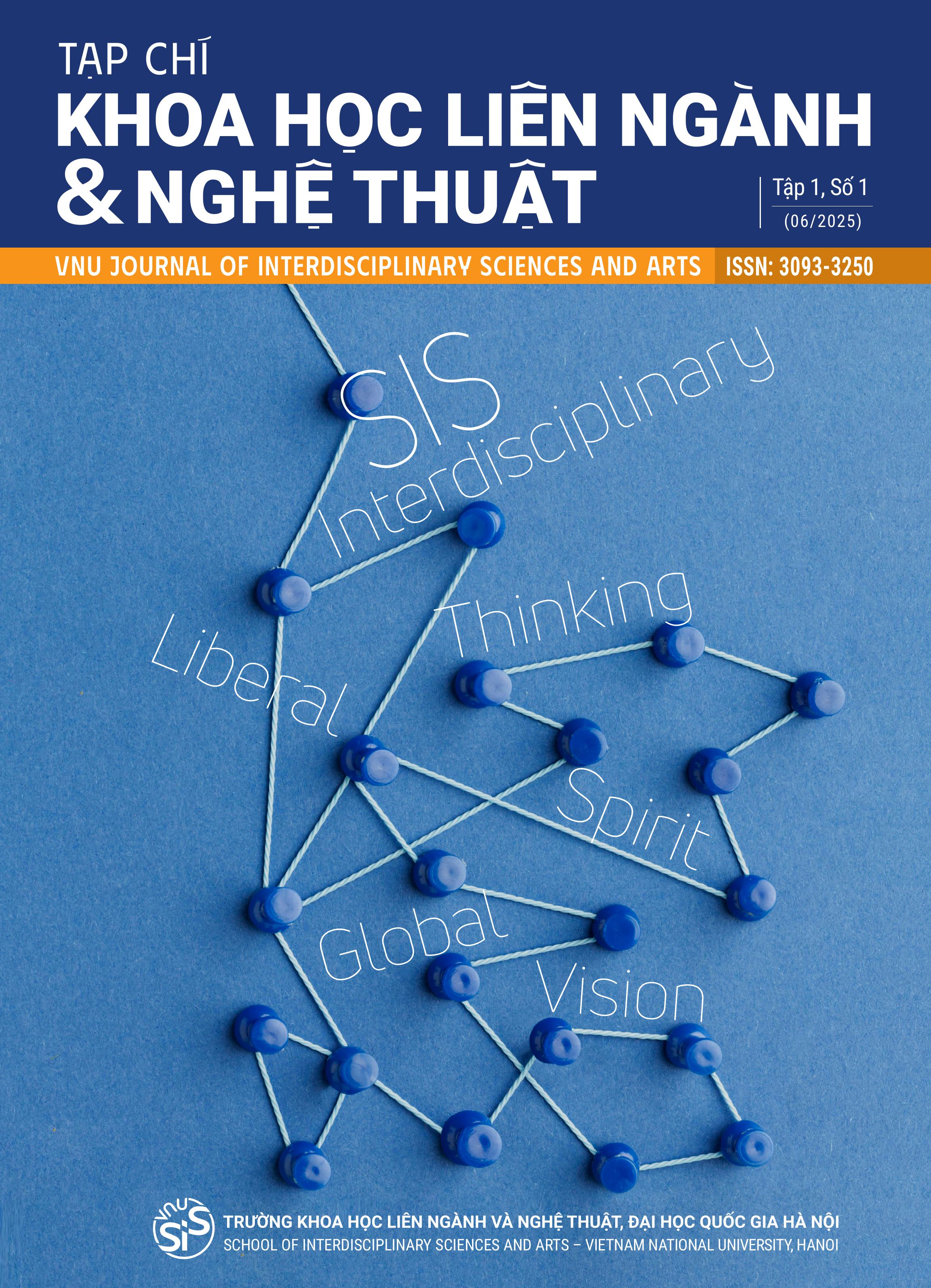
VNU JOURNAL OF INTERDISCIPLINARY SCIENCES AND ARTS – 2026
Theme: "When Đổi Mới Becomes a Heritage"
To: Distinguished Scholars,
The 6th National Congress of the Communist Party of Vietnam in December 1986 marked a pivotal turning point, transitioning the nation from wartime reconstruction to a period of comprehensive building and renewal. This congress opened a new chapter in Vietnamese history: an era of peace, social restructuring, and integration into the globalization process—transforming the legacy of Independence and Unification into prosperity, equity, and a new international standing. Over the past four decades, Đổi Mới (Renovation) has touched every facet of social life, serving as a master "coordinating system" that shapes Vietnam’s identity in the global era. Within this process, Đổi Mới has driven profound transformations in heritage, cultural industries, education, architecture, planning, and the arts.
Forty years after the historic milestone of 1986, the Đổi Mới enterprise has gained sufficient historical distance and cultural stature to become a subject of scientific inquiry in its own right. Recognizing the historical significance of this movement, the VNU Journal of Interdisciplinary Sciences and Arts has designated the overarching theme for 2026 as: “When Đổi Mới Becomes a Heritage.” We hope that interdisciplinary research on Đổi Mới will provide a way to perceive foundational values and historical lessons, thereby constructing a forward-looking vision for the nation.
We cordially invite scholars to contribute research papers to our 2026 thematic issues, focusing on the following key areas:
- Redefining Heritage and Cultural Governance
- The process of redefining heritage and heritage-related issues in contemporary society.
- Resolving the tension between "static" historical preservation and the dynamic demands of cultural industries; converting "heritage capital" into "cultural resources" through the roles of the state and the community.
- Cultural Industries and the Creative Economy in Global Value Chains
- Shifts in management mindsets and the current state of Vietnam's creative economic ecosystem; the individualization of "public-consumer" needs.
- Vietnam's position in global value chains and strategies to assert national identity through cultural products.
- Institutional barriers and solutions to promote cultural industries and the creative economy in line with national cultural potential.
- Literature and Arts: Theory, Practice, and Discourse
- The evolution of Vietnamese literature and arts over 40 years of Đổi Mới from sociological and aesthetic perspectives; shifts in theoretical paradigms and creative practices.
- Interdisciplinary/Transdisciplinary trends: from feminism, gender, and ecocriticism to trauma, history, memory, war, and identity crises in the context of migration and globalization.
- The role of art institutions and new types of artists.
- The integration process and the construction of national values in a globalized world.
- Architecture, Planning, and Landscape
- Urbanization processes and patterns of architecture, planning, and landscape from 1986 to the present.
- Modernizing urban infrastructure while preserving landscape memory and reshaping spatial identity.
- Educational Philosophy and Practice
- The shift in educational philosophy and content from one-way transmission to comprehensive competency development to meet national requirements.
- Developments in heritage education and aesthetic-artistic education over the last four decades.
- Challenges of the Digital Age
- Self-reflection of art forms (linguistics, cinema, visual arts) in the face of the digital explosion and interdisciplinary practices.
- Heritage, architecture, cultural industries, and education in the face of revolutionary technologies such as AI, Big Data, and digitalization: potentials and challenges.
- The impact of Resolution 57-NQ/TW (Breakthroughs in Science, Technology, and Innovation), Resolution 71-NQ/TW (Breakthroughs in Education and Training), and Resolution 80-NQ/TW (Cultural Development) on various sectors during the upcoming "Đổi Mới 2.0" phase.
The Journal welcomes submissions in the author’s preferred language, including Vietnamese, English, French, and other common languages. The theme "When Đổi Mới Becomes a Heritage" will be featured throughout 2026, starting with a Special Issue in April 2026.
- Deadline for the Special Issue: March 30, 2026. Submissions for subsequent thematic issues are welcome following this date.
Requirements:
Papers in languages other than English must include a title, abstract, and keywords in English. All submissions must adhere to standard academic structures and quality. Articles will undergo a double-blind peer review process.
- Detailed Guidelines: https://joisa.edu.vn/index.php/joisa/Submission-Guidelines
- Online Submission: Click here
- Email: tapchikhlnnt@vnu.edu.vn
We look forward to receiving your valuable contributions.